Wet Home? Start Here, Start Small
Water where it should not be? Shut off the source if it is safe, then get help lined up. A small, fresh leak costs far less to fix than soaked drywall, wet insulation and mold.
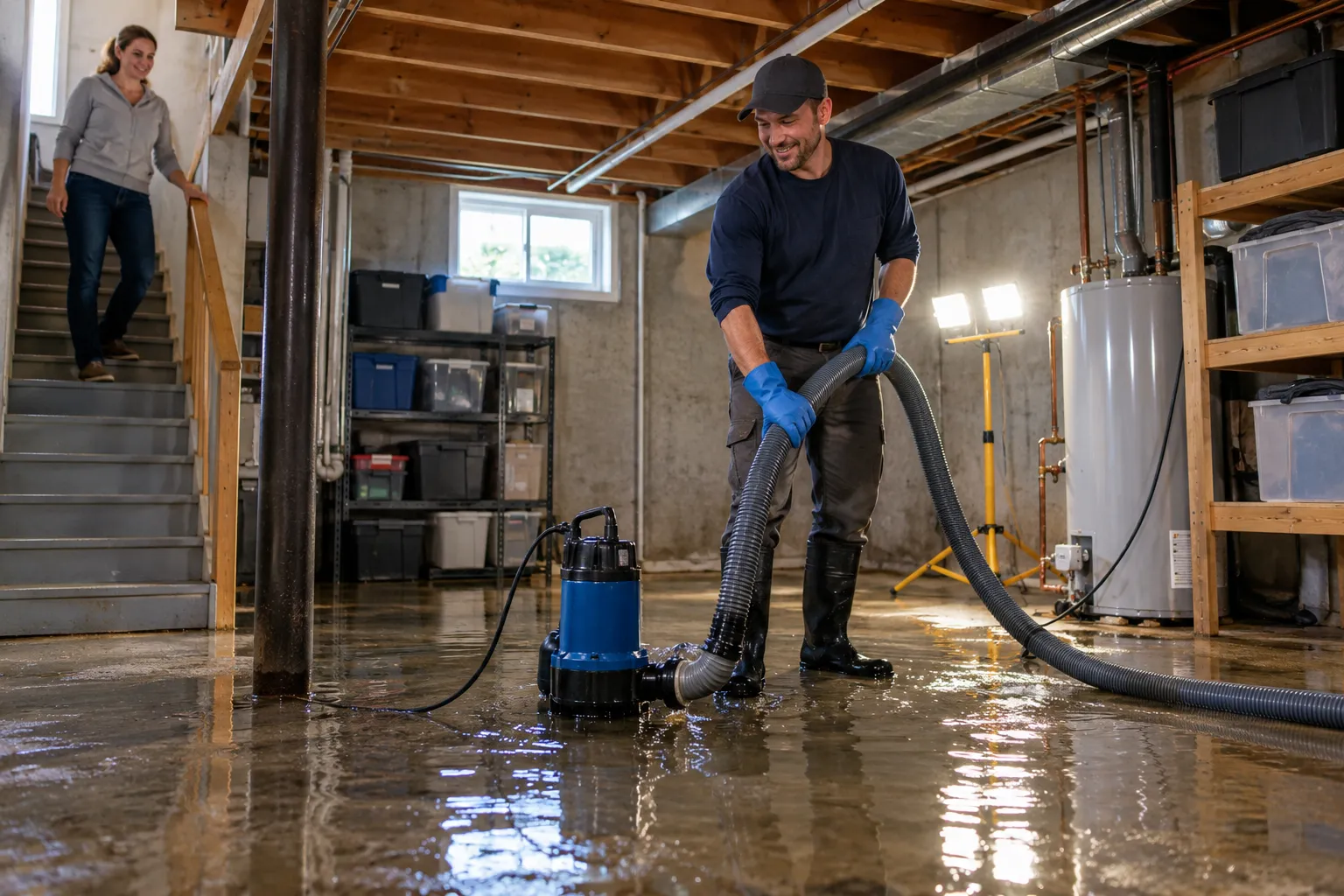
Uponreception Restoration is a referral service for Rochester and the Greater Rochester area. We do not do the repair work. We connect you with independent local providers in our network who handle emergency water damage repair, water extraction, structural drying and flooded basement cleanup.
Here is the money picture. The price of a job depends on how much water there is, how long it sat, what it soaked, and how many days drying equipment must run. Waiting often pushes a job into a bigger price bracket. A written quote early keeps surprises small.
Request a callback to check provider availability, then compare what you hear.
Request Service
You are never required to hire anyone. Ask questions, read the quote, and choose what fits your budget and your home.
How It Works
What Uponreception Restoration is
Uponreception Restoration is a referral service. We connect homeowners across the Greater Rochester area with independent water damage restoration providers. Those providers run their own businesses, set their own prices and do the actual work. Uponreception Restoration does not send anyone to your door and does not perform repairs.
How a referral works
- You describe the problem by phone or with the request form.
- A local provider in our network gets in touch to talk through the job.
- The provider explains the steps and gives you a written quote.
- You compare, ask questions and decide. There is no obligation.
Request a callback to check provider availability for your street and your type of damage.
What drives the price
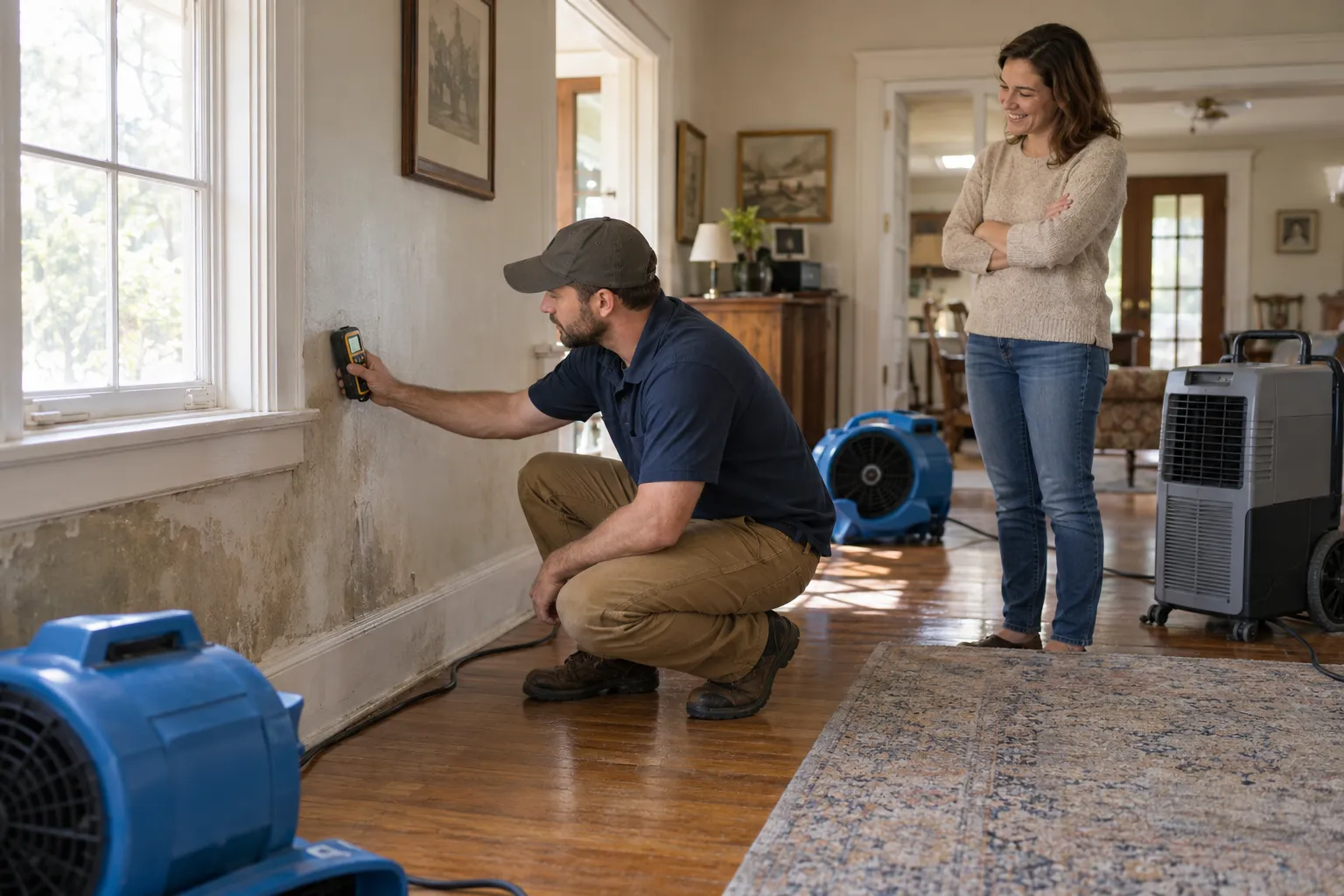
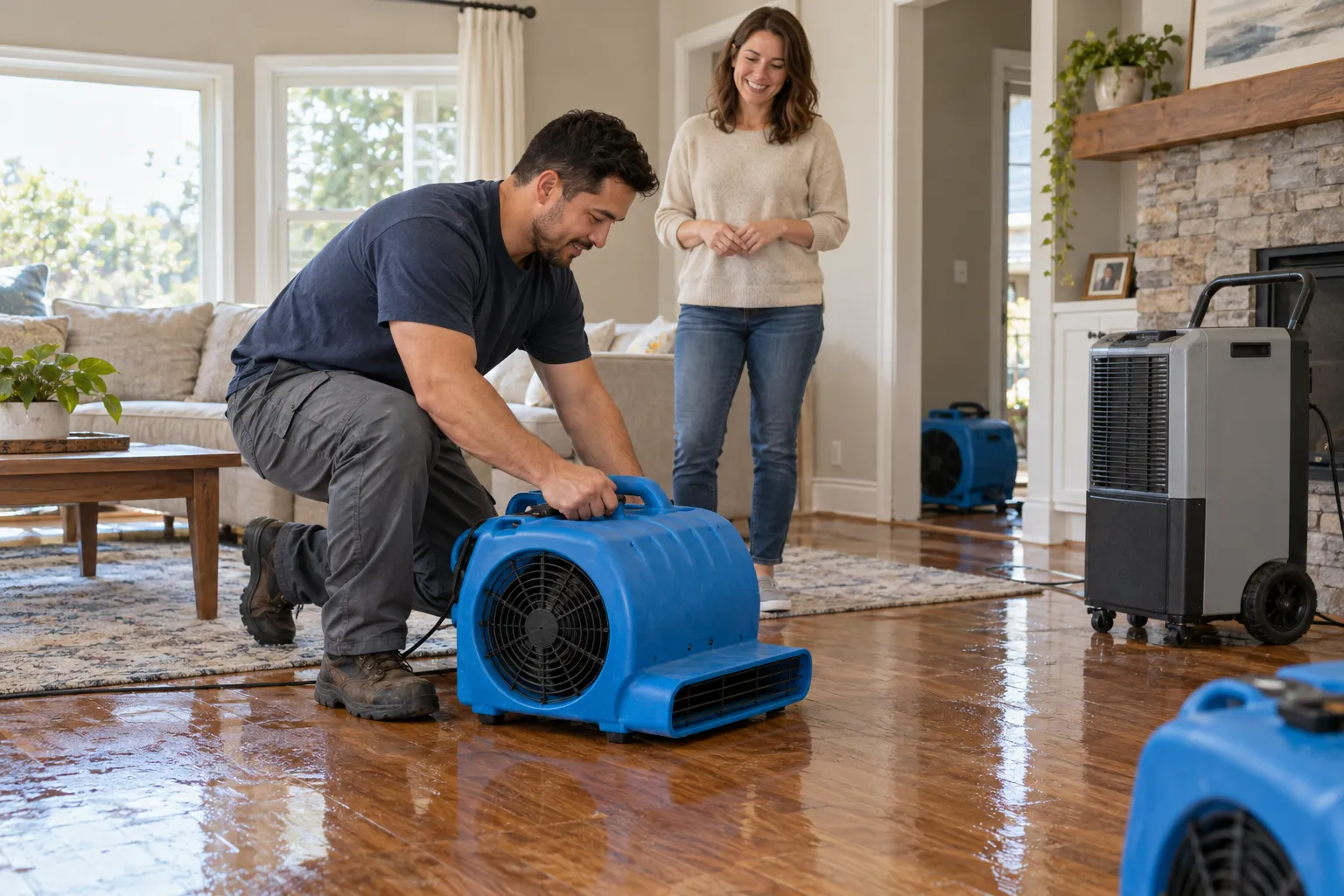
Most water jobs are priced by size and by time. The amount of wet material matters. So does the kind of water, since a clean supply-line leak is simpler than dirty floodwater. Drying days, equipment count, removal of ruined materials and cleanup all add up. Typical U.S. jobs run from a few hundred dollars for a small leak to several thousand for a wide, wet basement, and they vary a lot by job. Get a written quote and ask what is and is not included.
Repair is only half the job
A dry house can get wet again. That is why this site also talks about what comes after: finding the cause, fixing it, and building simple habits that keep water out.
Built for Local Weather and Homes
Our region has weather that tests a house. Cold, snowy winters pile weight on roofs. Frost and thaw cycles crack mortar and open small gaps. Spring snowmelt sends water toward foundations all at once, and coastal storms push in heavy rain and wind.
Many homes here are older. Full basements are common, often with stone or block foundations that let damp in. Multi-family buildings share walls and pipes, so one leak can reach a neighbor. Cape Cod style homes have tight upper rooms where a roof leak can hide for weeks.
If you live in Rochester or anywhere in the Greater Rochester area, many providers in our network work on these house types in these seasons. Their pricing differs, so ask for a written quote from more than one if time allows.
Request Service
Send the short form with a few details about the damage. You can compare what comes back, with no obligation to hire.
Keep the Water Out for Good
After the work is done, keep it dry
A finished repair is a fresh start, not a finish line. Most repeat water damage comes from the same cause as the first one. Ask the provider what likely caused the problem, write it down, and use the habits below to guard against a repeat.
Check gutters and grading
Clogged gutters spill water right beside the foundation. Clear them in fall and again after spring thaw. Make sure downspouts carry water several feet away. Soil should slope away from the house, not toward it.
Treat the sump pump like an appliance
Test the pump each season by pouring in a bucket of water. Listen for the float and the motor. Check the discharge line for ice or blockages. A battery backup is a modest cost compared with a flooded basement.
Watch foundation walls
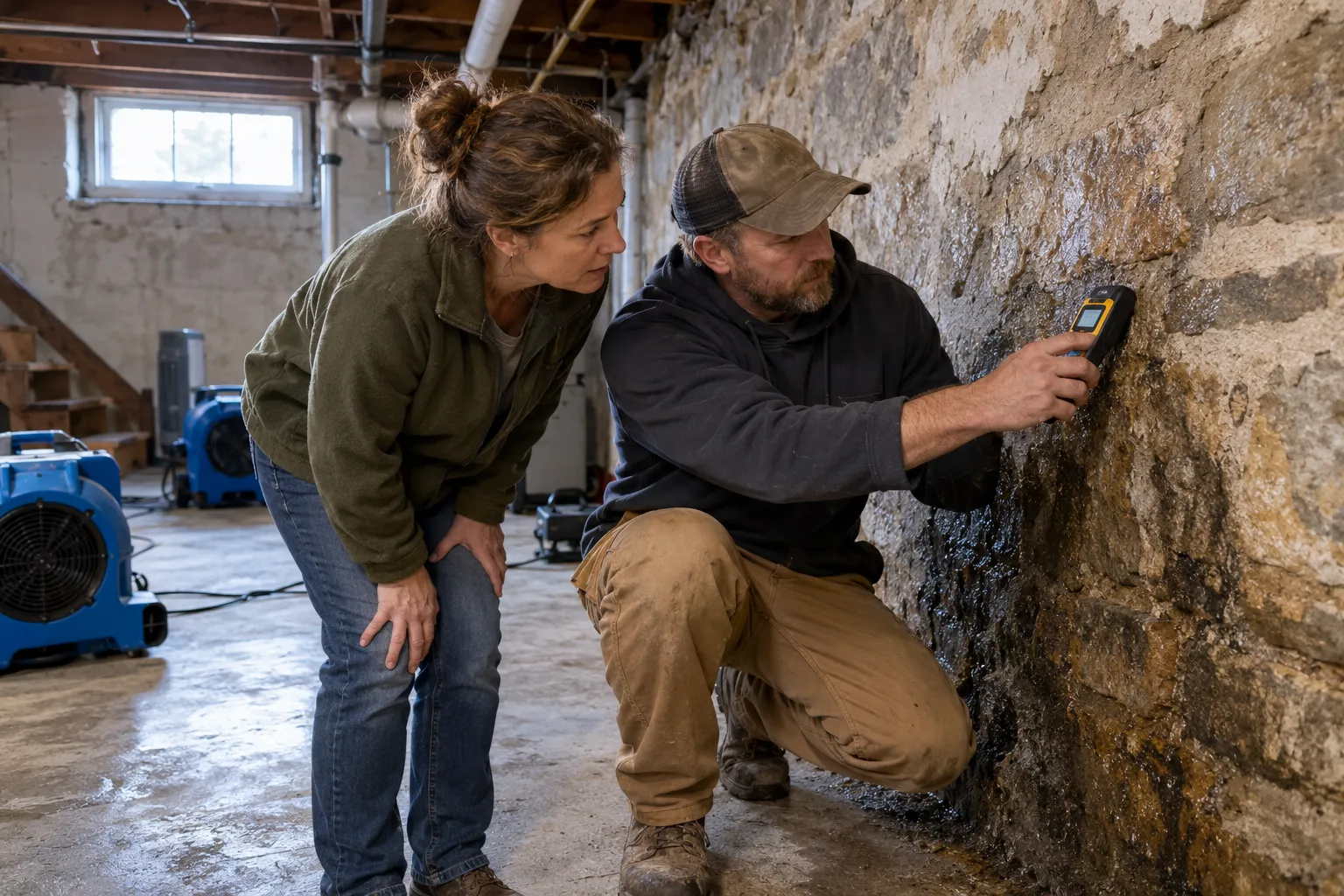
Stone and block walls in older homes can seep. Look for white mineral crust, damp patches and new cracks. Small cracks can often be sealed cheaply. Larger ones deserve a professional look before spring snowmelt arrives.
Protect pipes when temperatures drop
Pipes along outside walls and in crawl spaces are the usual trouble spots. Insulate them, seal drafts and keep heat on in unused rooms. If a pipe is frozen, shut the water off before it bursts, not after.
Replace hoses and seals
Washer hoses, water heater lines and dishwasher seals wear out. Swap rubber hoses for braided ones every few years. Look under sinks monthly. A slow drip is cheap to fix and expensive to ignore.
Keep a simple moisture log
Note any damp spot, its date and what the weather was. A small notebook helps you see patterns. It also gives a provider useful facts, and it can help document damage for a claim.
Know when to ask for help again
Musty smells, bubbling paint, warped floors and rising humidity are early warnings. Some policies may cover sudden damage, so check your policy. Reaching out early usually keeps the job, and the bill, smaller.
Ask About Your Situation
Ready to move while the problem is still small? Request a callback to check provider availability and talk through what you see. Prefer writing? Use the request form or email contact@uponreception.garden. Tell us what got wet, when it started and whether the water has stopped. A provider can then give you a clearer quote. Uponreception Restoration only makes the connection, and you decide whether to hire.
Request Service